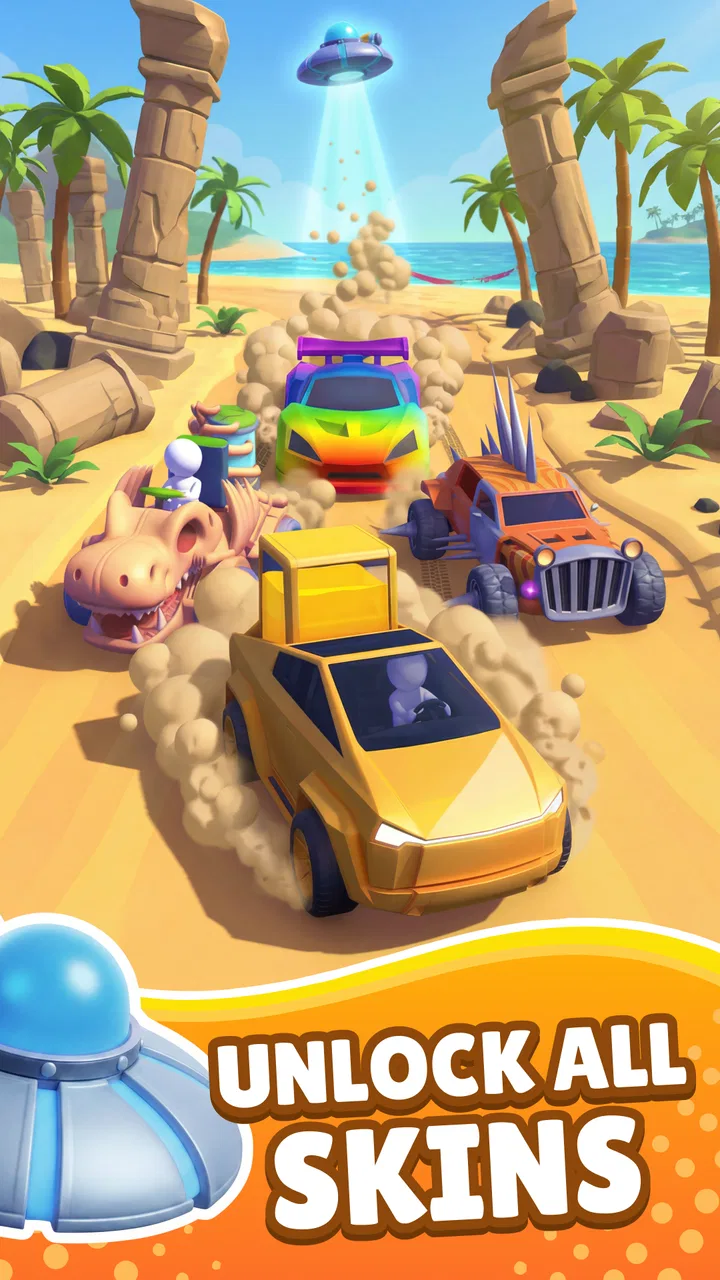
Sand Miner: Idle Mining Game
- 4.0
- Rating
- 1.00M
- Installs
- Free
- Price

 Analysis by App-foxy
I spent time with Sand Miner: Idle Mining Game as a casual arcade title, and my first impression was clear: this is built for short, repeatable sessions rather than a demanding, skill-heavy challenge. You guide an excavator through sand, collect resources, and gradually work toward the fantasy of becoming a mining tycoon. The idea is easy to understand within moments, which makes it approachable when I want something uncomplicated.
That simplicity is also the key to deciding whether it belongs on your phone. If you enjoy watching progress build while making occasional decisions, the game has an appealing rhythm. If you want precise platforming, deep strategy, or a constantly changing challenge, it may feel too light. I found its strongest qualities in accessibility and quick engagement, while its main weakness is that the basic loop can become familiar before long.
How the mining loop feels in everyday play
The game sits in the arcade category, but it borrows the relaxed progression style associated with idle mining games. Instead of asking me to master complicated controls, it puts the excavator and the digging process at the center. The pleasure comes from seeing a small operation develop into something more productive, then deciding when to continue, improve, or simply let the progress carry on.
You May Also Like

 Blood Strike: 2.5 Anniversary
Blood Strike’s Loadouts Turn Every Drop Into a Tactical Gamble
A close look at Blood Strike’s custom loadouts: how fast access to signature weapons reshapes its battle royale rhythm, rewards preparation, and narrows the gap between fights.

 Pandora - Music & Podcasts
Pandora’s Music Is Easy to Start, but Harder to Recover
Pandora’s strength is its low-effort path from a seed to a station. Its weak spot is how much confidence it asks you to place in connection, setup, and quiet recovery.

 8 Ball Pool
 Is Built on Rivalries, Rematches, and Routine
A close look at the rivalries, rematches, shared routines, and unanswered safety questions that turn a quick pool match into a persistent mobile community.

 Samsung Music
’s Quiet Strength Is Playing What You Already Own
Its reach comes less from spectacle than from dependable access to a personal library. That simplicity is both the app’s strongest retention engine and its ceiling.

 AccuWeather: Weather Radar
AccuWeather Review: A Quick, Clear Forecast for Everyday Decisions
For everyday plans, the best forecast is the one you can understand quickly. AccuWeather makes rain timing, radar, and local conditions easy to act on, with a few trade-offs.

 Hill Climb Racing
Why Hill Climb Racing Still Turns Crashes Into One More Run
A tiny car, a bumpy hill and one more upgrade: Hill Climb Racing keeps resurfacing because its simple chaos makes every near-miss feel personal.
More From Our News Desk



That makes it a natural fit for spare moments. I can imagine opening it while waiting for a train, taking a short break between tasks, or playing for a few minutes before bed. The premise does not require a long explanation, and the controls are friendly to players who do not usually spend time with arcade games. Its Everyone content rating also makes the presentation broadly accessible for families, although younger players may still need guidance around optional purchases.
The most useful way to approach the game is to treat each session as a small management routine. I would begin by checking what the excavator has achieved, use available progress to improve the operation, and then decide whether another active stretch is worthwhile. That habit prevents the game from turning into aimless tapping. The mining theme gives those small actions a sense of direction, even when the underlying choices remain straightforward.
One practical tip is to avoid spending resources immediately just because an upgrade or reward appears available. I found that it is better to pause and consider whether the improvement helps the part of the loop that is currently slowing down. In a game built around gradual accumulation, a modest boost to the bottleneck can feel more valuable than spreading attention across every option. This is a small distinction, but it makes the progression feel more deliberate.
What to expect from the speed of progress
Sand Miner is not the sort of arcade game I would choose for instant, dramatic action. Its perceived speed depends on how actively I play and how much progress has already been built. Early moments can feel pleasantly quick because every improvement is noticeable. Later, the same loop may feel slower if I am waiting for enough resources to make the next meaningful step.
That pacing is not automatically a problem. Idle games are designed around anticipation, and part of the appeal is returning to see what has accumulated. Still, readers should know that the game’s satisfaction comes from gradual growth rather than a constant stream of new mechanics. If your idea of speed means rapid reactions and frequent surprises, a traditional reflex-based arcade game will probably feel more energetic.
I also recommend setting a simple session goal before playing. For example, I might decide to reach the next improvement, collect a particular amount, or check whether the excavator can handle a new stretch of progress. Without a goal, the repeated digging can blur into background activity. With one, even a short visit feels like it has a beginning and an endpoint.
The idle angle is most useful when I am willing to leave the game and return later, rather than expecting every minute to be equally exciting. This is a good match for people who like incremental progress alongside other activities. It is less suitable for anyone who wants a complete challenge in a single sitting, because the appeal is tied to accumulation over repeated visits.
Where longer sessions can feel heavier
During a longer play period, the main demand is not complicated control but repetition. I may spend several minutes checking progress, collecting gains, and deciding what to improve. That can be relaxing, but it also exposes the limited variety of a focused mining loop. The longer I stay without a clear objective, the more likely the actions begin to feel routine.
A better workflow is to divide play into active and passive phases. In the active phase, I pay attention to the excavator and make the decisions that affect progress. In the passive phase, I stop checking constantly and return later. This approach makes the idle design work in its favor and avoids turning the game into a chore that demands frequent attention.
Another non-obvious trade-off is that efficiency and enjoyment are not always the same thing. Choosing the mathematically strongest improvement may help progress, but experimenting with a less obvious route can make the session more engaging. I would use the efficient option when I want a quick return, and experiment when I am playing simply to relax. That flexibility matters because the game is more enjoyable when I am not treating every decision like a strict optimization problem.
For heavy use, I would also keep an eye on how long I leave the game running continuously. The title is designed around idle-style progress, but that does not mean a phone needs to remain open all day. Closing it between sessions is a sensible habit for anyone who wants to limit battery use, heat, or distraction. I would not confuse the convenience of idle progression with a reason to keep the screen active without purpose.
Stability and recovery after interruptions
Reliability matters more in an idle game than it might in a brief arcade challenge because the whole appeal depends on returning to accumulated progress. In my experience, the best way to use this kind of title is to make progress in manageable visits and treat each reopening as a check-in rather than a continuous commitment. That reduces frustration if a session is interrupted by a call, another app, or a low-battery warning.
I would not build a daily routine around leaving it open indefinitely. A more dependable pattern is to finish an action, allow the game to settle, and then exit normally before switching to something else. This is especially sensible on older devices or when several apps are already active. It also makes recovery easier because I am less likely to return after an unnecessarily long background or foreground session.
The game’s straightforward structure helps here: I do not need to remember a complicated chain of inputs after an interruption. When I come back, I can review the mining state and continue with the next decision. That makes it forgiving for casual players who may open it only a few times throughout the day. The recovery experience is less about restoring a difficult action and more about re-establishing the next small objective.
There is a difference between a game being easy to resume and being endlessly reliable under every condition. I would keep expectations realistic, particularly when playing on a device with limited free space, an aging battery, or many background tasks. If an interruption happens, the sensible response is to reopen the game, check whether the expected progress is present, and continue only once the screen is responding normally.
Device fit, storage habits, and purchase awareness
The game supports Android devices running version 7.0 or later, so it is available to people using a wide range of phones and tablets. That broad compatibility is useful, but it should not be read as a promise that every older device will feel equally comfortable during extended play. Screen responsiveness, available memory, and battery condition can still shape the experience even when the operating system is supported.
On a modest phone, I would use shorter sessions and close other demanding apps first. That is a practical way to reduce competition for system resources without turning the game into a technical project. I would also avoid judging performance from a single moment after launching several apps at once. A clean, ordinary session gives a more useful impression of how the game fits the device.
The title is free to download, which makes trying the basic experience easy. It includes optional in-app purchases ranging from $0.99 to $99.99 per item, so I would recommend deciding on a spending limit before handing the device to a child or playing during a relaxed, impulsive session. The mining loop should be evaluated on its own first. If the game is not enjoyable without accelerating progress, paying more is unlikely to solve the underlying issue.
This is one area where the game differs from a completely offline toy or a one-time paid arcade title. The free entry lowers the barrier to experimentation, but optional purchases can change how some players approach progression. I prefer to regard them as a boundary to manage rather than a reason to rush. Playing patiently gives a clearer sense of whether the gradual pace suits me.
For families, the Everyone rating is reassuring in terms of broad audience positioning, but age suitability does not remove the need to discuss purchases. I would explain that free installation and optional spending are separate things. That conversation is more useful than assuming a child will naturally understand the difference between a reward in the game and a transaction outside it.
How it compares with other arcade choices
Compared with reflex-driven arcade games, Sand Miner asks less from my hands and more from my patience. There is no need to chase a high score through rapid reactions every second. That makes it calmer and more accessible, but also less thrilling for players who want pressure, precision, or a clear fail state.
Compared with deeper tycoon and management games, the mining theme is easier to pick up but offers a lighter decision burden. I do not approach it expecting a detailed economic simulation. Its appeal is the feeling of operating an excavator and watching a small mining idea expand, not the complexity of balancing a large business with many interconnected systems.
That middle position is important. The game works well as a bridge for someone curious about idle titles but unwilling to learn a dense interface. It can also serve as a low-stress alternative when I am tired of competitive arcade play. On the other hand, experienced management fans may outgrow it if they need layered planning, extensive customization, or a campaign that keeps introducing substantial new problems.
The developer, Take Top Entertainment, has positioned the experience around a clear central fantasy rather than an overloaded feature set. I see that focus as both a strength and a limitation. It keeps the first session approachable, yet it means the game has to rely heavily on the satisfaction of incremental progress. Players who do not enjoy that particular reward cycle will not find much reason to stay.
Who will enjoy it, and who should skip it
I would recommend this game to someone who wants a free arcade experience that can be checked in short bursts. It is especially suitable for players who like watching a process become more productive, making occasional upgrade decisions, and returning later to see the result. The excavator theme gives the idle structure a concrete image, which is more inviting than an abstract progress bar.
It is also a reasonable choice for a casual player who has never tried an idle mining game. The controls and concept are easy to grasp, and the broad age rating makes it less intimidating than many action-focused alternatives. A person looking for something to occupy five minutes at a time will probably understand its appeal quickly.
I would skip it if I need a strong narrative, demanding skill tests, or a large amount of strategic depth. I would also hesitate to recommend it to anyone who dislikes waiting for progress or feels compelled to spend money whenever advancement slows. In that situation, a premium arcade game with a fixed structure may be a better fit, because its pacing is usually easier to understand from the start.
Players who are sensitive to repetitive routines should try it with a clear limit. A few focused sessions can reveal whether the mining cycle remains satisfying. There is no advantage in forcing a long play period simply because the game is free. The right question is whether returning to the excavator feels rewarding, not whether every possible upgrade has been collected.
My performance and value verdict
Sand Miner: Idle Mining Game has reached over a million installs and holds an average rating of 4.1 from around eighteen thousand ratings, which suggests that its straightforward mining concept has found a substantial casual audience. Take Top Entertainment keeps the identity easy to understand: dig, build progress, and return when you want another small step forward.
The current version is 3.1.0, and the game was released on March 9, 2023. I mention those details because they place the experience in the context of an established mobile title rather than a brand-new experiment. For someone deciding whether to try it now, the more important point is still the play style: this is a gentle, incremental arcade game, not a high-intensity technical showcase.
From a speed and resource perspective, I would use it as a short-session game instead of leaving it open continuously. That approach suits its design, preserves the relaxed feel, and is kinder to devices with limited battery or memory. Its recovery pattern is naturally forgiving because the next visit is usually about checking progress and choosing the next action, not rebuilding a complicated sequence.
My honest recommendation is conditional but positive. Try it if the idea of managing an excavator and gradually building a mining operation sounds satisfying, especially if you prefer calm progress to rapid reactions. Start without spending, set a simple session goal, and see whether the repeated loop holds your attention. If it does, the free entry and accessible design make it an easy casual companion. If you need constant novelty or deep management decisions, choose a more demanding arcade or tycoon game instead.
FAQs for Sand Miner: Idle Mining Game
01What is Sand Miner: Idle Mining Game about?
Sand Miner: Idle Mining Game is an engaging idle game where players manage and upgrade their own sand mining operation. The goal is to extract resources, upgrade equipment, and optimize workflows to maximize profits. Players can tap into various strategies to expand their mining empire while enjoying casual, incremental gameplay.
02Is Sand Miner: Idle Mining Game free to play?
Yes, Sand Miner: Idle Mining Game is free to download and play on both Android and iOS platforms. While the core gameplay is accessible without cost, there are optional in-app purchases available for players who wish to accelerate their progress or unlock exclusive content and features.
03Does Sand Miner: Idle Mining Game require an internet connection?
Sand Miner: Idle Mining Game can be played offline, allowing players to enjoy the game without an internet connection. However, certain features, such as in-app purchases or online leaderboards, may require connectivity to function properly. It’s ideal for both offline and online play.
04What are the main features of Sand Miner: Idle Mining Game?
The game offers a variety of features, including resource management, equipment upgrades, and strategic expansions. Players can enjoy a compelling idle gaming experience with automated mining processes, allowing them to progress even when they're not actively playing. The game also features vibrant graphics and a user-friendly interface.
05Are there any age restrictions for playing Sand Miner: Idle Mining Game?
Sand Miner: Idle Mining Game is suitable for players of most ages, typically rated for everyone. However, parental guidance is recommended for younger players due to in-app purchases and ad content. Checking the specific age rating on the app store is advised for further guidance.
Pros
- Engaging idle gameplay mechanics.
- Colorful and vibrant graphics.
- Easy to understand controls.
- Minimal ads for uninterrupted play.
- Regular updates with new content.
Cons
- Repetitive tasks can get tedious.
- Requires internet for some features.
- Progression can be slow without purchases.
- Limited social interaction options.
- Some users report occasional crashes.

Sand Miner: Idle Mining Game
Gallery